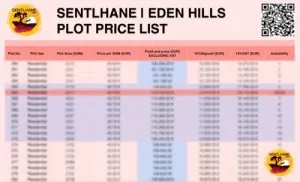



A late winter sun slides over the Sentlhane ridge and throws long light across pale grass, while a visiting couple lay a plot map against a clipboard and talk softly about numbers that cannot be captured by numbers alone. They have toured estates north of Johannesburg and suburbs along the Cape Peninsula, they have driven the ring roads of Pretoria, and they have now walked the quiet tracks of Sentlhane, where Eden Hills folds a private wildlife reserve into a residential plan. The spreadsheet question is simple. Which country holds the better property investment. The lived question, which matters more once you move in, asks how a home will change the week you live.
A fair comparison begins with the foundation of ownership, since tenure shapes everything that follows. Botswana offers a clear freehold route in designated developments, recorded at the Deeds Registry in a process that buyers from many jurisdictions recognize quickly, while South Africa’s private ownership structure is broad and familiar but varies in practice from city to city. Investors who think in decades value what feels stable and legible, and they often find that freehold title inside a managed wildlife estate reads as both a lifestyle promise and a governance promise, because design guidelines, association rules, and service commitments are written down before emotions rise.
Scale enters next, because markets reward both patience and liquidity, although not always at the same time. South Africa’s larger economy produces a deeper pool of comparables, a wider range of tenant types, and a long list of price points that move even when other levers stall. Botswana’s market is smaller and steadier, and Gaborone in particular behaves like a compact capital that prizes continuity, routine, and short commutes. Investors who want a diversified rental play may favor the breadth of South Africa’s metros, while investors who want a home that behaves like a long horizon store of comfort and of value will often see Botswana’s scale as a strength rather than a limit.
Time is the quiet driver that spreadsheets routinely underweight, yet families and tenants do not. The southern arc of Gaborone keeps daily travel humane, which means children arrive at school without a battle and evenings belong to verandas instead of brake lights. Large South African metros give choice in abundance, yet they also require navigation of distance and complexity, and that cost shows up first in mood and only later in money. When a house saves you forty minutes a day, it raises satisfaction and retention, and those two words perform more work in a portfolio than most glossy finishes ever will.
Landscape behaves like a utility in Sentlhane, which is to say it serves a daily function rather than acting as décor. Eden Hills places a conservation core at the center, then threads homes to it through green corridors, so the wildlife that moves at dawn and dusk becomes part of the way people live, not a picture on the horizon. South African estates deliver a different mix, ranging from golf communities to coastal enclaves to wine valley retreats, and many of them succeed on their own terms, although they ask residents to drive farther for the same feeling that Gaborone’s edge can deliver on an ordinary weekday. Investors who measure life in hours as much as in yields tend to notice this difference quickly.
Risk is best managed by process, not by promise, and both countries reward buyers who perform the quiet work early. Read design guidelines before you fall for a façade. Walk the site at two times of day. Confirm your conveyancer’s plan for transfer and for any local approvals, and treat the homeowners association as a partner that protects character and value rather than as a hurdle to be cleared. Botswana’s smaller scale often translates into coordinations that feel personal and legible, while South Africa’s variety demands that you learn a specific city, a specific municipality, and sometimes a specific street before you sign. Neither route is difficult if you respect the homework.
Build strategy reveals another contrast that matters in practice. Climate wise design in Botswana can achieve comfort with simple means, because houses that sit low, shade their glass, and face the prevailing breeze will feel generous without complication. South African regions run from humid coasts to highveld winters to Cape storms that test details, and those swings demand deeper specification and steadier maintenance. This is not a reason to choose one country over the other, yet it is a reason to choose a plan that listens carefully to its place. In Sentlhane, restraint and orientation do more work than gadgets, which helps budgets behave and keeps evenings quiet.
Returns are not only numbers. They are also habits that last. The households that stay in one address for years tend to share three patterns. Their commute is predictable, their neighborhood identity is strong enough to feel like a village, and their home engages with light and air in a way that removes stress instead of adding it. South African cities can produce those patterns in well chosen pockets, and many do, although it can take longer to find them. In Sentlhane the pattern is the plan, and Eden Hills repeats it with each plot that meets a corridor and each veranda that overlooks a line of trees where swallows turn at dusk.
For investors deciding between these two countries, a simple field test works better than a round of online debates. Spend a weekday in your target South African city and try to complete three errands between meetings. Spend the next day in Gaborone and do the same, then drive out to Sentlhane and stand beside a survey peg while the late light does its work. Ask yourself which routine you would like to repeat, and which address will still feel honest when the novelty has worn off. Good holdings do not feel like a performance every day. They feel like permission to live well.
The couple at the ridge fold their map and smile in a quiet way that real decisions bring. They have not rejected South Africa, because they still like its scale and the way certain neighborhoods hum, but they have recognized what they want from the next ten years. They want a short drive, a calm week, and a home that rests inside a reserve rather than alongside a boundary wall. For them the better investment is the one that keeps its promises, and the promises they value most are time, air, and a steady rhythm.
Kicker: The stronger investment is the one you keep because life is better with it, and in Sentlhane that feeling arrives before the ink is dry.