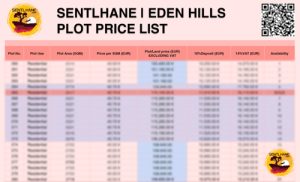



The southern approach to Gaborone feels busier this year, with new roofs appearing along the corridor beyond Mokolodi, survey pegs marching across open ground, and weekend traffic bringing families to walk plots before the light fades. Buyers want space and calm evenings paired with a practical commute, yet they are also reading the market with sharper questions, asking where values will hold, which estates feel authentic rather than generic, and how freehold plots compare with gated sectional schemes when the goal is a primary home that can also retain value over time.
On the edge of this conversation sits Sentlhane, a pocket of countryside close to the city that carries its own rhythm. The land falls away into small valleys where thorn trees trace the lines of seasonal water, and the wildlife corridors are not a brochure claim but part of daily life. Within this landscape, Eden Hills offers freehold plots shaped by an indoor–outdoor design ethos, placing the project in a specific category of the Botswana market: it is neither a high-density apartment block nor a distant smallholding that trades convenience for space, but rather a planned wildlife estate that aims to capture both.
The national picture matters because it sets buyer mood. Families are watching mortgage terms and build costs, while investors compare Gaborone with regional capitals and with South African nodes just across the border. Again and again the narrative returns to stability and liveability, since Botswana is known for steady governance and nature assets of genuine global weight. For buyers who prioritize a home first and an investment second, that mix has become the filter for every viewing and every call to a conveyancer.
In practical terms, the 2026 market feels like a conversation about trade-offs. Choosing an apartment brings immediate finishes and lower maintenance but requires giving up ground of your own. Opting for a smallholding delivers land but sacrifices commute time and services. Selecting a freehold plot inside a managed wildlife estate changes the equation entirely, because in Sentlhane the drive to town remains short, utilities and roads are planned as part of the estate, and the reserve is not a distant backdrop but an integral part of the neighborhood. Buyers are weighing how much that daily access to nature is worth.
Pricing in estates like Eden Hills is release-driven, meaning the published entry point is a guide rather than a fixed line. Plots near green corridors or with longer views attract attention first, and corner positions or gentle slopes matter because they shape design, sun, and privacy. Build choices then move the final number more than most people expect: a compact single-level plan with shaded outdoor rooms can sit well on this landscape and keep budgets rational, while a larger villa with deep verandas and view-facing glazing feels like an entirely different project. Both can fit the estate’s guiding philosophy if they sit low, respect the bush, and use finishes that last.
Foreign buyers continue to ask about process, and the short version is simple: identify the plot, complete due diligence with your conveyancer, lodge transfer through the Deeds Registry, and join the homeowners association that manages shared services and the conservation area. The longer version is where your professional team earns its fee, since early review of design guidelines helps avoid redraws and delays, early conversations with banks or financiers keep timelines clean, and early site visits at different hours reveal the light, the breeze, and the atmosphere when the place is quiet.
Gaborone’s southern arc looks set to carry a larger share of demand. Families who already work or school on this side of the city are reducing daily travel and gaining back time, while buyers who spent the last few years in compact houses are now trading up for sky and silence. The market rewards neighborhoods that feel authentic and protect what makes them special; in Sentlhane, that means biodiversity and night skies, and it means a plan that guides rather than flattens the landscape. Projects that hold that line tend to hold attention and value.
If you read the market from your desk you will only see part of the story, but walking the land tells you the rest. Park at the top of a ridge, watch how the sun slides across the ground and how the hills pull the air in the late afternoon, and listen. You will know quickly if this is where your year should end, with a signature on a deed and a plan that fits the lay of the land.
Kicker: Botswana’s 2026 market favors homes that feel true to their setting, and in Sentlhane that setting begins with hills, birds, and a short drive into town.